
Questions to Ask Before Hiring a Fiber Optic Installation Company
Fiber optic cabling provides the speed, reliability, and bandwidth that modern businesses need to support cloud applications, video conferencing, data centers, security systems, wireless networks, and growing digital operations. However, the success of a fiber optic project depends on more than selecting the right cable. The installation company you hire can significantly impact network performance, long-term reliability, and the total cost of ownership.
Before choosing a contractor, it is important to ask the right questions. A qualified fiber optic installation company should be able to explain its experience, installation process, testing procedures, project timeline, and approach to future scalability.
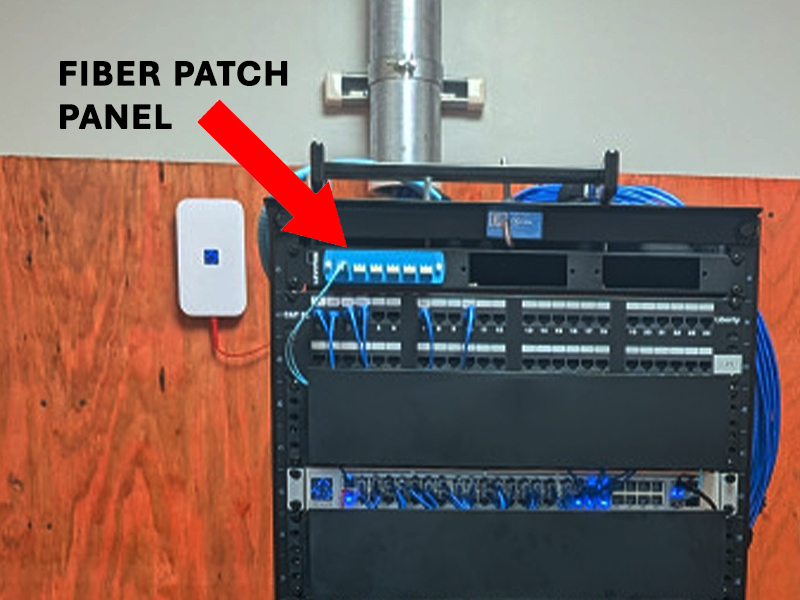
Here are the key questions to ask before hiring a fiber optic installation company for your business.
1. How Much Fiber Optic Installation Experience Do You Have?
Start by asking how long the company has been performing fiber optic installations and what types of projects it typically handles.
Fiber optic installation requires specialized knowledge that differs from traditional copper cabling. Technicians must understand fiber types, connectorization, splicing, cable pathways, bend radius requirements, termination methods, and testing standards.
Ask whether the company has experience with projects similar to yours, such as:
- Office buildings
- Warehouses and distribution centers
- Manufacturing facilities
- Healthcare facilities
- Schools and campuses
- Retail locations
- Data centers
- Multi-building or multi-location networks
Experience with comparable environments can help ensure the contractor understands the challenges associated with your facility, business operations, and network requirements.
2. Can You Recommend the Right Type of Fiber Cable?
Not every fiber optic cable is appropriate for every application. A reputable installer should evaluate your current network, distance requirements, bandwidth needs, equipment, and plans for future growth before recommending a cable type.
The two primary categories are single-mode and multimode fiber.
Single-mode fiber is commonly used for long-distance connections, telecommunications, campus networks, and applications requiring extended transmission distances.
Multimode fiber is often used for shorter-distance connections within buildings, data centers, and enterprise environments.
Your installer should also explain the differences between common fiber standards, connector types, and cable construction options. The right choice depends on the network’s purpose rather than simply selecting the cable with the highest advertised performance.
3. Will You Perform a Site Survey Before Providing a Quote?
A professional fiber optic installation company should conduct a site survey before finalizing the project scope and pricing.
During a site survey, technicians may evaluate:
- Existing cable pathways
- Conduit and raceway availability
- Cable tray capacity
- Equipment rooms and telecommunications closets
- Building access points
- Vertical and horizontal cable routes
- Distance between network locations
- Potential obstructions
- Environmental conditions
- Firestopping requirements
- Existing network infrastructure
A site survey helps identify potential challenges before installation begins. It also allows the contractor to develop a more accurate design and reduce the risk of unexpected costs or delays.
Be cautious of companies that provide a detailed quote without asking questions about your building, network equipment, cable routes, or installation environment.
4. What Installation Methods Do You Use?
Fiber optic cable can be installed using different methods depending on the building layout and project requirements. Ask the contractor how the cable will be routed, secured, protected, and terminated.
Potential installation methods may include:
- Pulling cable through conduit
- Installing cable in existing trays
- Using overhead pathways
- Routing cable through risers
- Installing new conduit or raceway
- Direct-burial installation for appropriate outdoor applications
- Aerial installation where applicable
The installation method should protect the cable from excessive tension, crushing, moisture, sharp edges, and improper bends. Fiber optic cable is sensitive to physical damage, and improper handling can lead to signal loss or future service issues.
The contractor should also explain how work will be coordinated around employees, customers, equipment, and business operations.
5. How Do You Handle Fiber Splicing and Termination?
Fiber splicing and termination are critical parts of a fiber optic installation. Poorly executed connections can create signal loss, reflection, and intermittent network problems.
Ask whether the company performs fusion splicing, mechanical splicing, field termination, or a combination of methods. Fusion splicing uses specialized equipment to join fiber strands and is often selected for permanent, low-loss connections.
You should also ask:
- What type of connectors will be used?
- How are splice enclosures protected?
- How are patch panels organized?
- How are fiber strands labeled?
- How will slack and service loops be managed?
- How will connections be protected from contamination?
A professional installation should leave telecommunications rooms and equipment racks organized, clearly labeled, and easy to maintain.
6. What Testing Will Be Included?
Testing should be a required part of every fiber optic installation project. Ask exactly what testing the company performs and whether test results will be provided after completion.
Depending on the project, testing may include:
- Optical loss testing
- Insertion loss testing
- Optical time-domain reflectometer testing
- Continuity testing
- Polarity testing
- Connector inspection
- End-face inspection
- Cable certification
- Fault and distance analysis
An optical time-domain reflectometer, or OTDR, can help identify events along a fiber link, such as splices, connectors, bends, breaks, or excessive signal loss.
Testing confirms that the installed cabling meets the project’s performance requirements and can help establish a baseline for future troubleshooting. Ask whether the contractor will provide documentation for each fiber strand or link.
7. Do You Follow Industry Standards and Building Codes?
Fiber optic installation should follow applicable industry standards, manufacturer recommendations, and local building and safety requirements.
Ask the company which standards guide its work and whether its technicians are trained in proper fiber handling, installation, testing, and safety procedures.
The project may need to account for:
- Cable separation requirements
- Fire-rated pathways
- Firestopping
- Grounding and bonding where applicable
- Plenum and riser-rated cable requirements
- Indoor and outdoor cable specifications
- Labeling and documentation standards
- Accessibility and maintenance requirements
Following standards helps ensure that the installation is safe, reliable, maintainable, and compatible with the surrounding infrastructure.
8. Can You Work Around Our Business Schedule?
Network installation can disrupt business operations if it is not carefully planned. Ask how the company handles work in active offices, retail environments, warehouses, healthcare facilities, or other occupied buildings.
Important questions include:
- Can work be performed after hours?
- Will installation require network downtime?
- How will employees and customers be protected?
- Will noisy or disruptive work be scheduled separately?
- How will access to restricted areas be coordinated?
- Who will communicate project updates?
- What happens if unexpected conditions are discovered?
An experienced contractor should be able to provide a project schedule and explain how installation activities will be coordinated to minimize disruption.
9. What Documentation Will We Receive?
Complete documentation is valuable for future maintenance, expansions, troubleshooting, and renovations. Ask what information will be delivered when the project is finished.
Useful documentation may include:
- Cable route diagrams
- Fiber strand assignments
- Port and patch panel information
- Splice records
- Test results
- Cable specifications
- Labeling information
- Equipment room diagrams
- As-built drawings
- Warranty information
Without accurate documentation, future technicians may spend unnecessary time tracing cables or identifying connections. Make sure documentation is included in the project scope rather than treated as an optional extra.
10. What Warranty and Support Do You Provide?
Before signing a contract, ask what warranties apply to the labor, materials, components, and completed installation.
Also clarify:
- How long the workmanship warranty lasts
- Which manufacturers’ warranties apply
- What issues are covered
- How service requests are submitted
- Whether troubleshooting is available after installation
- Whether future additions or repairs can be supported
- Whether emergency service is available
A company that stands behind its work should clearly explain its warranty and support policies before the project begins.
Choose a Fiber Optic Installation Partner Carefully
Hiring a fiber optic installation company is an important decision because the cabling infrastructure may support your business for many years. The right contractor should provide more than installation labor. It should offer thoughtful planning, appropriate cable recommendations, careful workmanship, thorough testing, accurate documentation, and dependable support.
Horizon Electronics does Fiber Optic Installation for Your Business, helping organizations plan and implement fiber optic infrastructure designed around their operational needs, network requirements, and future growth. Whether your business needs a new fiber backbone, building-to-building connectivity, data center cabling, or an upgrade to existing infrastructure, working with an experienced installation partner can help create a reliable foundation for your network.
Before moving forward, ask detailed questions, compare project scopes, and make sure the contractor can clearly explain how the installation will be designed, installed, tested, and supported. A well-planned fiber optic installation can improve network performance today while preparing your business for tomorrow’s technology demands.
If you would like a quote for an upcoming job,
please click the "Request Quote" button below.
Nationwide Coverage
