
What Is a Demarc Extension and When Does Your Business Need One?
When a business orders internet, fiber, phone, or other telecommunications services, the service provider typically delivers that connection to a specific location within the building. This point is known as the demarcation point, or demarc.
But what happens when the demarcation point is located somewhere that isn't practical for the business's network equipment?
That's where a demarc extension can help.
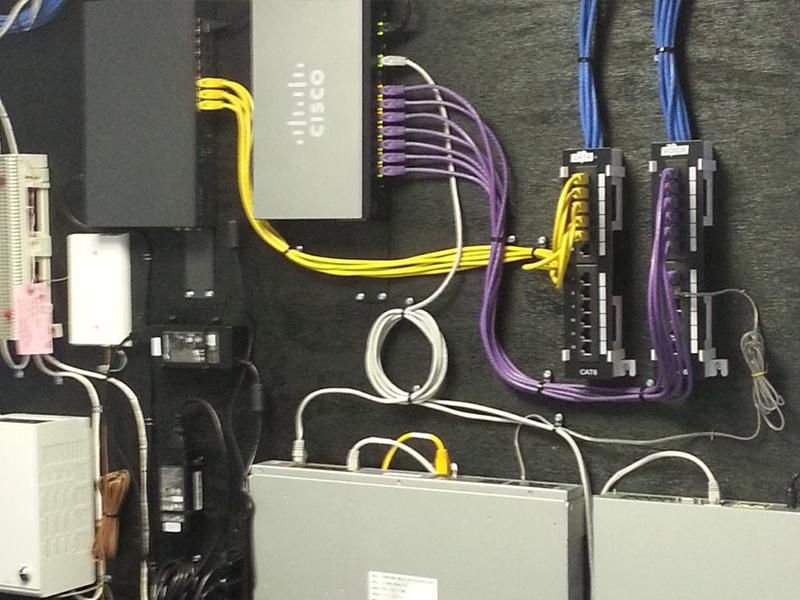
A demarc extension connects the service provider's demarcation point to another location within a building where the business can more effectively connect its network equipment. For businesses with large facilities, multiple floors, remote network closets, or complex layouts, a properly installed demarc extension can be an important part of the network infrastructure.
What Is a Demarcation Point?
A demarcation point is the physical location where responsibility for a telecommunications service generally transitions between the service provider and the customer's internal network.
The demarc may be located in a telecommunications room, utility room, building entrance facility, or another designated area.
For example, an internet service provider may bring a fiber connection into a commercial building and terminate it in a telecommunications room on the first floor.
The business's primary network equipment, however, may be located in a server room on another floor.
Running the provider's service directly from the demarc to the appropriate network equipment may require additional cabling. That connection is commonly referred to as a demarc extension.
What Is a Demarc Extension?
A demarc extension is the cabling or connectivity used to extend a telecommunications service from the provider's demarcation point to the location where the customer's network equipment is installed.
The extension may involve copper cabling, fiber optic cabling, or another appropriate medium depending on the service and network requirements.
The purpose is straightforward: move the service connection from the provider's demarc to a more practical location within the customer's facility.
A professional demarc extension should be properly designed, installed, labeled, routed, and tested.
Why Would a Business Need a Demarc Extension?
There are several reasons a business may need a demarc extension.
The Demarc Is Far From the Network Room
One of the most common situations occurs when the telecommunications provider terminates service in a location that is far from the company's primary network room.
Rather than placing network equipment in an inconvenient location, a demarc extension can connect the provider's service to the existing network infrastructure.
The Business Has Multiple Floors
Multi-story buildings can create challenges when the provider's service enters on one floor while the main network equipment is located elsewhere.
A properly planned demarc extension can help connect the incoming service to the appropriate telecommunications or server room.
The Building Has Multiple Network Closets
Large commercial facilities may have multiple intermediate distribution frames (IDFs) or network closets connected to a main distribution frame (MDF).
In these environments, the demarc may need to be connected to the appropriate network room as part of the overall structured cabling design.
A Business Is Moving or Renovating
A business renovation or relocation may change where network equipment is housed.
If the existing demarc is no longer conveniently located, a demarc extension may provide a practical way to connect the incoming service to the new network equipment location.
What Types of Services Can Require a Demarc Extension?
Demarc extensions can be used with several types of telecommunications and network services.
Depending on the provider and installation, these may include:
- Business internet
- Fiber optic internet
- Ethernet services
- Dedicated internet access
- Voice and telephone services
- Other telecommunications connections
The appropriate cabling solution depends on the service being delivered and the requirements of the business's network.
Demarc Extension vs. Standard Network Cabling
A demarc extension is not simply another network cable.
The distinction is important because the demarc represents the point where the service provider's infrastructure connects to the customer's internal infrastructure.
The extension effectively bridges that gap.
Once the service reaches the appropriate network room, it can connect to equipment such as:
- Routers
- Firewalls
- Network switches
- Patch panels
- Servers
- Other telecommunications equipment
Properly planning the connection between the demarc and the network equipment can help create a cleaner and more reliable network infrastructure.
What Does a Demarc Extension Installation Involve?
The exact installation process depends on the building and the telecommunications service, but a professional installation generally begins with evaluating the existing infrastructure.
The technician may need to determine:
- Where the demarc is located
- Where the network equipment is located
- The distance between the two locations
- What type of service is being delivered
- What type of cabling is appropriate
- Existing pathways and cable trays
- Building access requirements
- Potential obstacles or construction limitations
- Where the new cabling should terminate
The cable can then be routed through appropriate pathways to the destination network room.
Proper labeling and cable management are also important so that future technicians can identify the connection.
Why Demarc Extensions Should Be Professionally Installed
A poorly installed demarc extension can create unnecessary problems for a business.
Improper cable routing, poor terminations, inadequate protection, or incorrect cable selection can contribute to connectivity problems and make future troubleshooting more difficult.
Professional installation helps ensure the extension is integrated properly with the building's existing network infrastructure.
For larger facilities, documentation and labeling can be particularly valuable because multiple telecommunications connections may enter the building.
Should a Demarc Extension Be Tested?
Yes. Testing is an important part of a professional demarc extension installation.
Depending on the type of cabling being installed, appropriate testing can verify connectivity and performance.
For copper network cabling, certification testing can provide detailed information about the performance of the installed cable.
Fiber optic installations may require specialized testing to verify the performance and integrity of the fiber connection.
Testing provides an additional level of confidence that the new connection is ready to support the business's network service.
When Should a Business Consider a Demarc Extension?
A business should consider a demarc extension when the telecommunications provider's demarcation point isn't located where the company's network equipment needs to be.
Common situations include:
- Installing new business internet
- Upgrading to fiber optic service
- Moving a server room
- Renovating an office
- Expanding into additional floors
- Adding a new network closet
- Connecting a telecommunications room to a central network room
- Building out a new commercial facility
- Consolidating network equipment
If the incoming service and network equipment are separated by distance or building layout, a demarc extension may be the solution.
Demarc Extensions for Large Commercial Facilities
Large commercial buildings often have more complicated network infrastructure than a small office.
Warehouses, manufacturing facilities, distribution centers, healthcare facilities, schools, retail locations, and multi-tenant buildings may have telecommunications services entering at one location while network equipment is distributed throughout the facility.
In these environments, demarc extensions may be part of a larger structured cabling or network infrastructure project.
Planning the demarc connection at the beginning of a project can help prevent costly changes later.
Horizon Electronics Installs Demarc Extensions for Your Business
Horizon Electronics provides commercial network infrastructure services for businesses that need reliable and professionally installed connectivity.
Horizon Electronics installs demarc extensions for your business, helping connect telecommunications services from the provider's demarcation point to the appropriate network equipment location.
Our network infrastructure services can support businesses dealing with new installations, network upgrades, facility expansions, renovations, and multi-location deployments.
Whether your business needs a copper or fiber connection extended to a network room, or you are planning a larger structured cabling project, professional installation and testing can help ensure the infrastructure is ready for your network requirements.
Planning a Demarc Extension
A demarc extension may seem like a simple connection, but proper planning is important to ensure that the service provider's connection integrates correctly with the business's network infrastructure.
Before beginning a project, businesses should identify the location of the existing demarc, determine where network equipment will be located, evaluate the building's cable pathways, select the appropriate cabling, and plan for testing and documentation.
For businesses moving into a new facility, upgrading internet service, or expanding their network, addressing the demarc early in the planning process can help prevent connectivity and installation issues later.
A professionally installed demarc extension provides a reliable connection between the telecommunications service entering the building and the network infrastructure that supports the business every day.
If you would like a quote for an upcoming job,
please click the "Request Quote" button below.
Nationwide Coverage
