
How Often Should Commercial Network Cabling Be Tested?
Commercial network cabling is the foundation of a business’s IT infrastructure. When cables are properly installed, tested, and maintained, they provide reliable connectivity for computers, phones, wireless access points, security systems, point-of-sale equipment, and other connected devices.
But how often should commercial network cabling be tested?
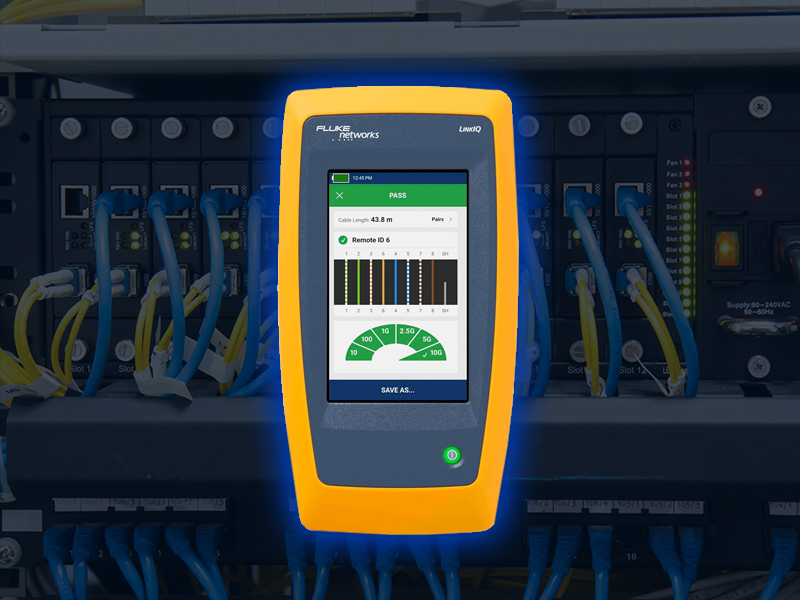
For most businesses, network cabling should be tested when it is first installed, after significant changes or repairs, when connectivity problems occur, and periodically as part of an organization's infrastructure maintenance program. For critical environments, more frequent testing may be appropriate.
Regular cable testing can identify performance problems before they result in network downtime, slow connections, intermittent connectivity, or expensive troubleshooting.
Why Is Commercial Network Cabling Testing Important?
Network cabling can look perfectly fine while still having performance problems. A cable may have damaged conductors, improper terminations, excessive signal loss, or other issues that are not visible during a basic visual inspection.
Professional cable testing provides measurable information about the condition and performance of the cabling infrastructure.
Testing can help businesses:
- Identify faulty or damaged cables
- Verify that cables were installed correctly
- Confirm that cabling meets applicable performance requirements
- Troubleshoot intermittent network problems
- Reduce unexpected network downtime
- Verify repairs and modifications
- Document the condition of network infrastructure
- Prepare for network upgrades
- Protect investments in network equipment
For businesses with hundreds or thousands of network drops, testing becomes especially important because manually troubleshooting every connection can be time-consuming and expensive.
When Should New Network Cabling Be Tested?
Newly installed network cabling should be tested before the installation is considered complete.
Professional installers typically certify individual cable runs to verify that they meet the required performance specifications.
Testing should take place after cables have been terminated at patch panels, wall outlets, or other connection points. This confirms that the complete permanent link or channel performs properly—not simply that the cable itself is capable of carrying a network signal.
For large commercial projects, cable certification results can also provide valuable documentation for the building owner, IT department, general contractor, or facility manager.
Testing newly installed cabling helps catch installation problems while they are still relatively easy to correct.
How Often Should Existing Network Cabling Be Tested?
There is no single testing interval that applies to every commercial building. The appropriate schedule depends on the age of the infrastructure, operating environment, type of cabling, and importance of the network.
A practical approach is to test commercial network cabling in the following situations:
During New Installations
Every new cable run should be tested and certified before being placed into service.
After Network Modifications
Cabling should be tested after significant modifications, relocations, additions, or repairs. Moving equipment, replacing patch panels, adding connections, or changing network closets can introduce problems.
When Network Problems Occur
If users experience slow connections, intermittent connectivity, dropped connections, or unexplained network failures, cable testing should be part of the troubleshooting process.
Before Major Network Upgrades
Businesses planning a network upgrade should consider testing existing cabling before purchasing new switches, access points, or other equipment.
For example, upgrading network hardware to support higher speeds may expose weaknesses in older cabling. Testing can help determine whether the existing infrastructure is capable of supporting the desired network performance.
During Facility Changes
Office renovations, warehouse expansions, tenant improvements, and other construction projects can expose network cabling to damage. Testing after construction or major facility changes can confirm that the infrastructure remains operational.
As Part of Preventive Maintenance
Businesses with mission-critical networks may benefit from periodic cable testing as part of an overall infrastructure maintenance program. The appropriate interval should be based on the environment and the importance of the network rather than relying on a universal testing schedule.
What Is Cable Certification Testing?
Cable certification testing is more comprehensive than simply plugging a network tester into a cable and checking whether there is a connection.
Certification equipment evaluates whether a cable installation meets the performance requirements for its specified category.
Depending on the cabling system, testing can evaluate characteristics such as:
- Wire mapping
- Length
- Insertion loss
- Return loss
- Near-end crosstalk
- Resistance
- Propagation delay
- Delay skew
- Other performance parameters
Professional certification testers can provide a pass/fail result and detailed test information that can be retained as part of the building's network infrastructure records.
What Is Fluke DSX Cable Testing?
One commonly used professional testing platform is the Fluke Networks DSX CableAnalyzer series.
Fluke DSX testing equipment is designed for certification of copper twisted-pair cabling and can provide detailed measurements of cable performance.
For commercial installations, professional certification testing provides much greater confidence than simply verifying that a device can establish a network connection.
A cable can appear to work while still failing to meet the performance requirements necessary for reliable high-speed networking.
Signs Your Network Cabling May Need Testing
Businesses don't necessarily need to wait for a scheduled maintenance period to test their cabling.
Consider professional testing if you notice:
- Intermittent network connections
- Unexpectedly slow network speeds
- Devices repeatedly disconnecting
- Frequent network errors
- Problems isolated to specific network drops
- Wireless access points that don't perform as expected
- New equipment that cannot achieve its expected connection speed
- Network problems following construction or renovations
- Unidentified problems within a network closet
Testing can help determine whether the problem originates with the cabling, network hardware, configuration, or another component of the infrastructure.
How Does the Age of Network Cabling Affect Testing?
Older cabling deserves additional attention, particularly when businesses are upgrading their network technology.
Many commercial buildings contain multiple generations of cabling installed during different renovations or technology upgrades. A network closet might contain newer Cat6A cabling alongside older Cat5e or even legacy cabling.
This can make it difficult to determine what infrastructure is available without proper documentation and testing.
Before investing in a major network upgrade, businesses should consider having their existing cabling evaluated. Testing can identify which cable runs are suitable for the intended technology and which may need replacement.
Why Professional Network Cabling Testing Matters
Commercial network infrastructure can be complex. Large facilities may contain hundreds or thousands of individual cable runs connecting offices, workstations, wireless access points, security systems, servers, and other devices.
Professional testing provides documented results and helps identify problems that may otherwise remain hidden.
It also gives businesses a baseline for future troubleshooting. If test results are retained, network administrators and facility managers can compare future results against the original installation data.
Horizon Electronics Tests Network Cabling for Your Business
Horizon Electronics provides professional network cabling services for businesses that need reliable, high-performance connectivity.
Horizon Electronics tests network cabling for your business to help verify that commercial cabling installations are performing properly and meeting the requirements of the network infrastructure.
Whether you are installing new cabling, troubleshooting an existing network, renovating a facility, or preparing for a technology upgrade, professional testing can provide valuable information about the condition of your network infrastructure.
For businesses operating across multiple locations, having a qualified technology partner can also simplify large-scale cabling projects and network infrastructure deployments.
Build Testing Into Your Network Maintenance Strategy
There isn't a one-size-fits-all answer to how often commercial network cabling should be tested. New installations should be tested and certified before deployment, while existing cabling should be tested after significant modifications, when network problems occur, before major upgrades, and periodically when the business environment warrants preventive maintenance.
The key is not simply testing on a particular schedule. It is making cable testing part of a broader strategy for maintaining reliable network infrastructure.
For commercial buildings where network connectivity is critical to daily operations, professional cable testing can help identify problems early, reduce downtime, and provide confidence that the physical network is ready to support today's—and tomorrow's—technology.
If you would like a quote for an upcoming job,
please click the "Request Quote" button below.
Nationwide Coverage
