
Best Practices for Labeling and Managing Network Cabling in Large Facilities
In large commercial buildings and industrial warehouses, network cabling systems can quickly become complex. Without proper organization and labeling, troubleshooting network issues, performing upgrades, or expanding infrastructure can become time-consuming and costly. Following best practices for cable management helps ensure long-term efficiency, reliability, and scalability.
The Importance of Proper Cable Labeling
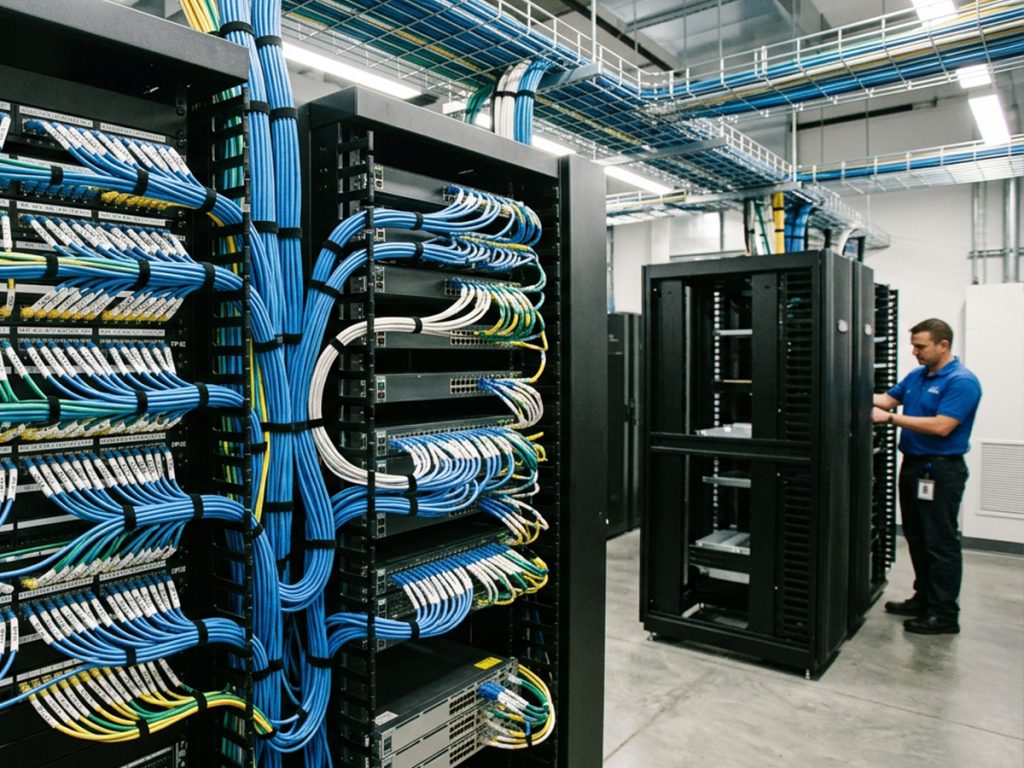
Clear and consistent cable labeling is one of the most important aspects of network management. Every cable should be properly identified at both ends using durable, easy-to-read labels. This makes it much easier for technicians to trace connections, identify issues, and perform maintenance without disrupting operations.
Well-labeled systems also reduce downtime during repairs or upgrades, helping businesses maintain productivity and avoid unnecessary delays.
Organized Cable Routing and Management
Keeping cables organized is essential in large facilities where hundreds or even thousands of network connections may be present. Using cable trays, J-hooks, conduits, and patch panels helps maintain a clean and professional installation while protecting cables from physical damage.
Proper routing also improves airflow around equipment and reduces signal interference, helping maintain optimal network performance. Avoiding tangled or overcrowded cabling makes future expansions much easier as technology and operational demands evolve.
Documentation and Scalability
Maintaining accurate network documentation is another key best practice. Keeping detailed records of cable routes, connection points, and network layouts allows businesses to quickly identify infrastructure changes and plan for future growth.
A well-documented cabling system helps simplify expansions, equipment upgrades, and troubleshooting efforts over time.
Working with Experienced Professionals
Horizon Electronics adheres to best practices for labeling and managing network cabling in large facilities. Their team designs organized, scalable structured cabling systems that improve efficiency, simplify maintenance, and support long-term operational needs.
Proper cable management is more than just organization—it’s an investment in the reliability, scalability, and future success of your network infrastructure.
If you would like a quote for an upcoming job,
please click the "Request Quote" button below.
Nationwide Coverage
