
Cat5e vs. Cat6A: Which Network Cable Is Right for Your Business?
Choosing the right network cabling is an important decision for any business planning a new network installation, facility expansion, or technology upgrade. While Cat5e and Cat6A are both widely used Ethernet cable standards, they offer different levels of performance and are designed for different networking environments.
For facility managers, business owners, and IT professionals, understanding the differences between Cat5e and Cat6A can help ensure the network infrastructure meets current requirements while providing room for future growth.
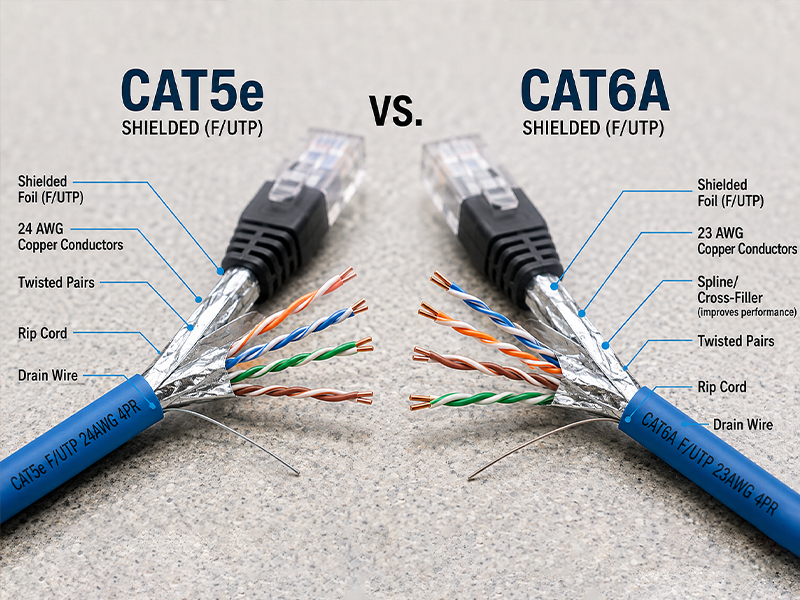
The right choice depends on factors such as network speed, cable distance, device density, facility layout, and future technology requirements. An experienced structured cabling contractor can evaluate these factors and recommend the appropriate solution for your business.
What Is Cat5e Cabling?
Cat5e, short for Category 5 enhanced, is a common Ethernet cabling standard used in commercial and residential networks. Cat5e supports Gigabit Ethernet speeds up to 1 Gbps over distances of up to 100 meters under appropriate installation conditions.
Cat5e remains a practical solution for many applications, including:
- Standard office networks
- Workstations
- Printers
- VoIP phones
- Basic wireless access points
- Point-of-sale systems
- Small commercial facilities
- General-purpose network connections
For businesses with moderate network requirements, Cat5e can provide reliable performance when properly installed and maintained.
However, businesses planning new infrastructure should consider whether their network requirements are likely to increase over the life of the cabling.
What Is Cat6A Cabling?
Cat6A, or Category 6 augmented, is designed for higher-performance commercial networking environments. Cat6A supports 10 Gigabit Ethernet over distances up to 100 meters and provides improved resistance to crosstalk compared with earlier cable categories.
Cat6A is commonly considered for environments that require:
- High-speed networking
- Large numbers of connected devices
- High-performance wireless access points
- Data-intensive applications
- Large commercial facilities
- Data centers
- Healthcare facilities
- Manufacturing environments
- Warehouses and distribution centers
- Technology-intensive offices
Cat6A can provide businesses with additional network capacity and infrastructure designed to support demanding applications.
Cat5e vs. Cat6A: What's the Difference?
The biggest difference between Cat5e and Cat6A is their performance capabilities.
| Feature | Cat5e | Cat6A |
| Typical maximum Ethernet speed | 1 Gbps | Up to 10 Gbps |
| Maximum channel distance | Up to 100 meters | Up to 100 meters |
| Bandwidth | Up to 100 MHz | Up to 500 MHz |
| Crosstalk protection | Good | Improved |
| Cable size | Generally smaller | Generally larger |
| Installation | Easier to route | Requires more planning |
| Best suited for | Standard networks | High-performance networks |
While Cat5e may be sufficient for some businesses, Cat6A provides significantly more bandwidth and is often a better choice when designing new infrastructure intended to remain in service for many years.
When Is Cat5e the Right Choice?
Cat5e can still be an appropriate choice when the network does not require 10 Gigabit Ethernet and the business has relatively modest bandwidth requirements.
For example, a small office with standard computers, printers, VoIP phones, and internet connectivity may not need the additional capacity provided by Cat6A.
Cat5e may also be appropriate when upgrading an existing network where the current infrastructure and equipment are already designed around Gigabit Ethernet.
However, businesses should consider the expected lifespan of the installation before choosing Cat5e for a new construction or major renovation project.
When Should a Business Choose Cat6A?
Cat6A is often the better choice for businesses that want to build a network infrastructure capable of supporting higher speeds and future technologies.
Cat6A can be particularly beneficial when:
You're Building a New Facility
New construction provides an opportunity to install modern infrastructure before walls and ceilings are finished. Choosing higher-performance cabling during construction can make future upgrades easier.
You're Installing High-Speed WiFi
Modern wireless access points can support increasingly high data rates. The wired connection feeding each access point must have enough capacity to support the wireless network.
Cat6A can provide the performance needed for high-capacity wireless deployments.
You Have a High-Density Network
Warehouses, healthcare facilities, manufacturing plants, and large offices can have hundreds or thousands of connected devices.
Higher-performance cabling provides additional capacity for these demanding environments.
You're Planning for Future Growth
Network cabling can remain in a building for many years. Businesses should consider not only what their network needs today but also what it may require five, ten, or more years from now.
Installing cabling that exceeds current requirements can reduce the need for another infrastructure upgrade later.
Consider More Than Cable Category
Choosing between Cat5e and Cat6A isn't simply a matter of selecting the cable with the highest specifications.
A professional network design should also consider:
- Building size
- Cable pathways
- Network equipment
- Number of users
- Wireless access points
- Security cameras
- VoIP systems
- Internet bandwidth
- Future expansion
- Environmental conditions
- Cable distances
For example, a warehouse with high ceilings, metal shelving, wireless scanners, cameras, and automated equipment may have very different requirements from a small professional office.
Installation Quality Matters
Even the best network cable can perform poorly if it is installed incorrectly.
Professional installation includes proper cable routing, bend-radius management, termination, labeling, and testing. Installers must also avoid excessive pulling force, improper cable bends, and other installation practices that can negatively affect performance.
Once the installation is complete, cable testing and certification can verify that the network infrastructure performs according to the applicable standards.
Don't Forget Fiber Optic Cabling
Cat5e and Cat6A are copper Ethernet cables, but some commercial networks also require fiber optic cabling.
Fiber is often used for:
- Building-to-building connections
- Network backbones
- Data centers
- Long-distance connections
- High-bandwidth applications
- Multi-building campuses
A complete commercial network may use both copper and fiber, with each technology serving a specific purpose.
Why Businesses Choose Horizon Electronics
Choosing the right network cable is only one part of designing reliable commercial network infrastructure. Horizon Electronics evaluates each business's specific requirements and installs the correct network cables for your business needs.
Whether a project calls for Cat5e, Cat6, Cat6A, fiber optic cabling, or a combination of technologies, Horizon Electronics can design and install a structured cabling system based on the facility's current requirements and future technology plans.
Horizon Electronics provides commercial structured cabling services for offices, warehouses, manufacturing facilities, retail locations, healthcare organizations, schools, hotels, distribution centers, and multi-location businesses. Their services can include cable installation, fiber optic installation, network rack and closet buildouts, cable management, testing, certification, and documentation.
For businesses undergoing new construction, renovations, expansions, or network upgrades, working with an experienced commercial cabling contractor helps ensure the infrastructure is properly designed and installed from the beginning.
Cat5e vs. Cat6A: Which Should Your Business Choose?
There isn't one network cable that is right for every business.
Cat5e can provide reliable Gigabit Ethernet performance for many standard applications, while Cat6A offers significantly greater bandwidth and supports 10 Gigabit Ethernet over standard commercial channel distances.
If you're installing new network infrastructure, it's important to look beyond today's requirements and consider how your business will use technology in the future. High-speed WiFi, cloud applications, security systems, IoT devices, video conferencing, automation, and other technologies can significantly increase network demands.
A professional assessment can help determine whether Cat5e, Cat6A, fiber optic cabling, or a combination of solutions makes the most sense for your facility.
Conclusion
The decision between Cat5e and Cat6A should be based on your business's network requirements, facility environment, technology plans, and expected growth.
Cat5e remains a capable solution for many standard network applications, while Cat6A provides greater bandwidth and is well suited for businesses that need higher-performance infrastructure and greater capacity for the future.
Rather than choosing cabling based solely on price or current network speeds, businesses should consider the expected lifespan of the infrastructure and the technologies they will need to support over time.
Horizon Electronics can help you make the right decision. By evaluating your facility and installing the correct network cables for your business needs, Horizon Electronics provides reliable structured cabling solutions designed to support your organization today and well into the future.
If you would like a quote for an upcoming job,
please click the "Request Quote" button below.
Nationwide Coverage
