
Key Factors to Consider Before Installing Commercial Structured Cabling
Commercial structured cabling is the foundation of a business's network infrastructure. Computers, phones, wireless access points, security cameras, access control systems, point-of-sale equipment, and other connected technologies all depend on reliable cabling to communicate effectively.
However, installing commercial structured cabling is not simply a matter of running cables from one location to another. A successful installation requires careful planning around the building, technology requirements, cable type, future growth, network equipment, and installation environment.
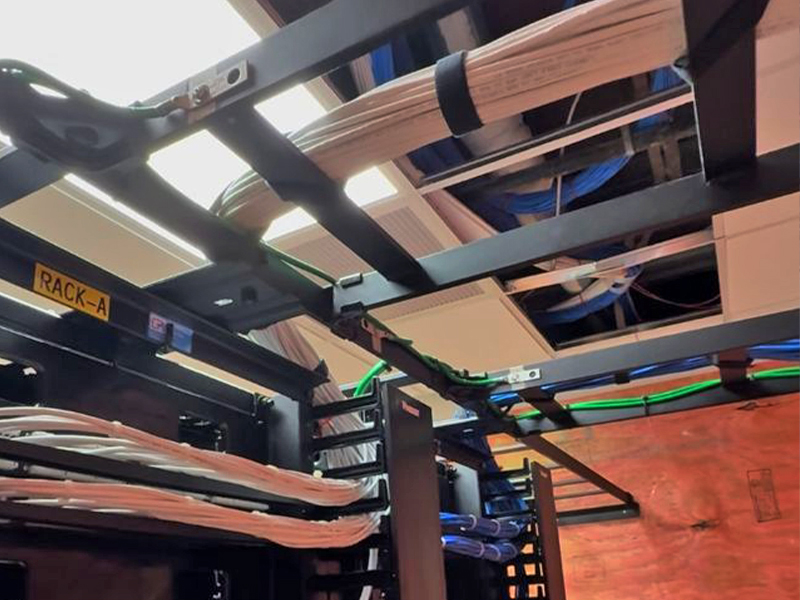
For facility managers, business owners, and IT professionals, considering these factors before installation can help prevent performance problems, unnecessary expenses, and difficult network upgrades later.
1. Evaluate Your Current and Future Network Requirements
The first step in any structured cabling project is understanding what the network needs to support.
Consider the technology currently used throughout your facility, including:
- Desktop computers and laptops
- Wireless access points
- VoIP phones
- Security cameras
- Access control systems
- Printers
- Point-of-sale systems
- Servers
- IoT devices
- Building automation systems
It is equally important to consider future requirements. A network designed only for today's devices may become inadequate as your business grows.
Planning for additional employees, devices, wireless access points, security systems, and higher bandwidth requirements can make your infrastructure more adaptable over time.
2. Choose the Appropriate Cable Category
Selecting the right cable is one of the most important decisions in a commercial structured cabling project.
Common copper cabling options include Cat5e, Cat6, and Cat6A. Each provides different levels of bandwidth and performance.
Cat5e can support many standard business applications, while Cat6 provides improved performance for modern networks. Cat6A offers greater bandwidth and is often considered for high-performance environments and installations intended to support future network requirements.
Fiber optic cabling may also be necessary for backbone connections, long-distance runs, data centers, or connections between buildings.
The correct choice depends on the facility and the technologies the network will support.
3. Conduct a Professional Site Survey
Before installation begins, the building should be carefully evaluated.
A professional site survey can identify:
- Existing cable pathways
- Network closets
- Equipment rooms
- Ceiling construction
- Wall materials
- Cable tray requirements
- Conduit availability
- Potential obstructions
- Existing cabling
- Equipment locations
Site conditions can significantly affect the design and installation process. Identifying challenges before work begins helps prevent delays and allows the installation team to develop an efficient cable routing plan.
4. Plan Cable Pathways
Cable pathways should be designed before cables are installed.
Depending on the facility, structured cabling may be routed through:
- Cable trays
- Conduit
- Ceilings
- Raised floors
- Telecommunications pathways
- Vertical risers
Proper pathway planning helps protect cables from damage and keeps the installation organized.
It also makes future maintenance and expansion easier. An installation that leaves no room for additional cabling can create significant problems when the business needs to expand.
5. Consider Network Closet Locations
Telecommunications rooms and network closets are central components of structured cabling systems.
Their locations should provide practical access to the areas they serve while allowing cables to be routed efficiently.
Facility managers should consider:
- Available space
- Equipment rack placement
- Power availability
- Cooling and ventilation
- Cable pathways
- Security
- Future equipment requirements
A poorly planned network closet can make maintenance and expansion unnecessarily difficult.
A well-designed closet provides organized racks, patch panels, cable management, and adequate space for current and future equipment.
6. Plan for Wireless Network Requirements
Commercial WiFi depends on the wired network infrastructure supporting wireless access points.
When planning structured cabling, businesses should determine where wireless access points will be installed and ensure appropriate cable connections are available.
Access point placement should take into account:
- Building size
- Floor plan
- Construction materials
- Employee density
- Customer traffic
- Warehouse shelving
- Potential interference
- Wireless coverage requirements
Planning cabling for WiFi during the structured cabling project is much easier than adding connections later.
7. Separate Data Cabling From Potential Sources of Interference
Electrical equipment and other sources of electromagnetic interference can affect network performance.
Structured cabling should be routed appropriately in relation to electrical wiring and equipment that could introduce interference.
Industrial facilities may require additional planning because of machinery, motors, manufacturing equipment, and other electrical systems.
An experienced commercial cabling contractor can evaluate the environment and determine appropriate routing and separation requirements.
8. Consider Building Size and Cable Distances
Cable distance is another important factor in network design.
Copper Ethernet cabling has established distance limitations. When connections need to travel farther, fiber optic cabling may be a better solution.
Large facilities, warehouses, manufacturing plants, campuses, and multi-building properties may require a combination of copper horizontal cabling and fiber optic backbone connections.
Designing the network around appropriate cable distances helps maintain reliable performance throughout the facility.
9. Plan for Future Expansion
One of the biggest mistakes businesses can make is designing a network only around their immediate requirements.
Commercial buildings may change significantly over the life of a cabling installation. Businesses may add employees, expand departments, install new technology, or renovate portions of the building.
Planning for additional capacity can make future upgrades much easier.
Facility managers should consider reserving pathway capacity and installing additional cabling where practical. This can reduce the need to reopen ceilings or walls when new connections are required.
10. Establish Consistent Labeling and Documentation
Professional cable labeling and documentation are essential for long-term network management.
Every cable should be clearly identified, and documentation should show how connections are organized.
Useful documentation can include:
- Cable labels
- Patch panel assignments
- Network closet layouts
- Cable routes
- Rack elevations
- Fiber assignments
- Test results
- Equipment locations
Good documentation allows technicians to troubleshoot problems faster and makes future upgrades significantly easier.
11. Consider Testing and Certification
A structured cabling installation should be tested after installation.
Testing can identify issues such as:
- Incorrect wiring
- Poor terminations
- Damaged cables
- Performance problems
- Connectivity issues
Cable certification provides documented verification that installed cabling meets applicable performance requirements.
For businesses that depend on reliable network connectivity, testing and certification provide an important level of assurance that the infrastructure is performing as intended.
12. Minimize Disruption to Business Operations
Commercial cabling projects often take place in active workplaces. Installation crews must work around employees, customers, equipment, and normal business operations.
Project planning should determine whether work can be performed:
- During normal business hours
- After hours
- On weekends
- During scheduled maintenance
- During construction or remodeling
Phased installations can also help businesses remain operational while infrastructure upgrades are completed.
For retail stores, warehouses, healthcare facilities, and other environments that operate continuously, minimizing disruption should be a major consideration.
13. Work With an Experienced Commercial Cabling Contractor
The quality of the installation is just as important as the quality of the cable itself.
An experienced contractor understands commercial installation requirements, cable routing, termination, testing, documentation, and network infrastructure design.
Professional installation helps ensure that cables are properly routed, supported, terminated, labeled, and tested.
It also gives businesses a knowledgeable partner who can help identify potential problems before they become expensive issues.
Why Businesses Choose Horizon Electronics
Horizon Electronics understands that every commercial cabling project has unique requirements. Before installing structured cabling for your business, Horizon Electronics considers the key factors that can affect network performance, reliability, scalability, and long-term maintenance.
Their team can evaluate the facility, determine appropriate cabling solutions, plan cable pathways, and design infrastructure around the technologies your business depends on. Horizon Electronics installs commercial structured cabling for offices, warehouses, manufacturing facilities, retail locations, healthcare organizations, schools, hotels, distribution centers, and other commercial environments.
Services can include Cat6 and Cat6A installation, fiber optic cabling, network rack and closet buildouts, patch panel installation, cable management, wireless access point cabling, testing, certification, and documentation.
Whether your business is building a new facility, renovating an existing location, replacing aging infrastructure, or expanding its network, Horizon Electronics can help create a structured cabling system designed around your current requirements and future goals.
Conclusion
Commercial structured cabling is a long-term investment in your business's technology infrastructure. Making the right decisions before installation can improve network reliability, simplify maintenance, support future growth, and reduce the likelihood of costly infrastructure upgrades later.
Before beginning a project, businesses should evaluate their network requirements, select the appropriate cable, conduct a site survey, plan pathways, consider wireless requirements, organize network closets, account for cable distances, and establish consistent testing and documentation procedures.
Most importantly, structured cabling should be designed with the future in mind. The infrastructure installed today may support your business for many years, making careful planning especially important.
Horizon Electronics considers these key factors before installing structured cabling for your business, providing commercial network infrastructure designed to support reliable connectivity today and the technology requirements of tomorrow.
If you would like a quote for an upcoming job,
please click the "Request Quote" button below.
Nationwide Coverage
